Across the country, school district leaders are facing a reality that few could have predicted before 2020.
Districts across the country are reporting an unprecedented surge of students arriving with developmental gaps that extend far beyond academics. Many early learners struggle not just with phonics or math concepts, but with the very skills required to participate in learning: sitting for instruction, attending to tasks, following multi-step directions, and regulating behavior in a group setting.
The result is a systemic challenge that many administrators describe as an inability to simply “do school.”
This shift has profound implications. When foundational skills are missing, instruction stalls. Classrooms become reactive environments focused on managing behavior rather than building learning. Teachers struggle to maintain instructional momentum. And districts increasingly face pressure to pursue costly out-of-district placements or more restrictive educational settings when students cannot successfully participate in classroom learning.
But a growing number of districts are proving that there is another path forward. These districts are addressing this challenge by focusing on data-driven foundational skill development through structured systems like ARIS (Academic Readiness Intervention System) to strengthen classroom instruction, build trust with families, and reduce reliance on restrictive placements and costly out-of-district services.
By strengthening the foundational skills that allow students to participate in learning, districts are better positioned to support students in their Least Restrictive Environment (LRE) while improving outcomes for both students and classrooms.
The lesson emerging from district leaders nationwide is clear: when you fix the foundations of learning, everything else begins to move. But to understand why this shift matters so much, we first have to understand the scale of the challenge districts are facing today.
The Post-COVID Crisis of “Doing School”
District administrators are seeing an unprecedented influx of young learners entering school without the prerequisite behaviors needed for classroom participation.
These gaps manifest as:
- Difficulty attending to instruction
- Limited task persistence
- Challenges following routines and directions
- Increased disruptive behavior affecting entire classrooms
In response, many districts have unintentionally shifted into the reactive mode of managing behavioral crises as they occur rather than addressing the underlying developmental skills that make learning possible. The result is a cycle where classrooms struggle to move forward instructionally, and programs begin to resemble supervised environments rather than structured learning environments.
As Monica Waltman, Director of Special Services at Douglas School District, explains:
“Sometimes those classrooms looked more like a daycare… because there wasn't a lot of structure. Students in their instructional isolation were really struggling.”
Breaking this cycle requires a different mindset, one that treats the skills required to participate in school as explicit, teachable competencies rather than assumed abilities.
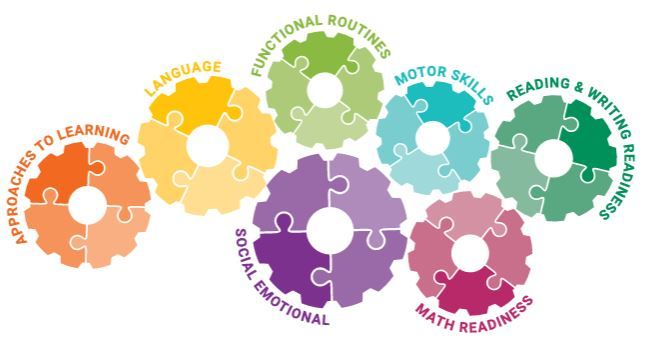
Mastering the "Gears" of Learning Before the Academics
Before a student can engage with a phonics lesson or a math worksheet, they must first master the mechanics of the classroom. Waltman describes this as the "task analysis of a day of school." This perspective treats "doing school" as a series of teachable, measurable skills like executive function, attending, and social regulation.
Students must first develop the foundational gears of learning—the behavioral and executive function skills that allow academic instruction to take hold.
These include:
- Attending to instruction
- Following routines
- Task completion
- Motor and imitation skills
- Social engagement and cooperation
Districts implementing ARIS are increasingly viewing a school day through task analysis, breaking down the act of “doing school” into measurable developmental steps. In strengthening these foundational gears, academic learning begins to accelerate.
Data from districts implementing a foundational skill approach consistently show a clear pattern: approaches to learning, functional language and motor skills development act as the primary drivers of later academic readiness. When those gears turn, math readiness and early literacy begin to move with them.
Without this intentional scaffolding, classrooms often stagnate leaving students isolated in programs that struggle to build instructional momentum. As Ms. Waltman observes, "I would say sometimes those classrooms looked more like a daycare... because there wasn't a lot of structure. [Students] in their instructional isolation were really struggling." And in today’s staffing environment, this lack of structure and instructional isolation becomes even more problematic.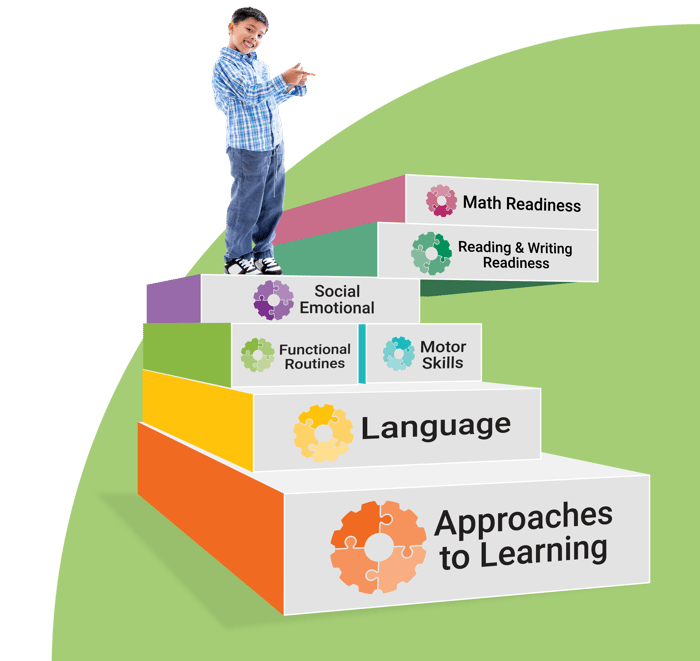
Winning the "80% Turnover" Battle
The current staffing landscape presents a significant threat to instructional consistency. Tara Geyser of Walton County School District noted a jarring reality: in high-volatility years, up to 80% of teachers in a given program may be brand new. In such an environment, student progress cannot be left to the "trial-and-error" of novice educators.
The solution is to provide a system so structured that it eliminates instructional guesswork for new teachers and paraprofessionals alike. This is where structured programs like ARIS become essential.
ARIS provides:
- Explicit scripted lessons
- Scaffolded skill progression
- Embedded assessment systems
- Implementation guidance including in classroom coaching for both teachers and paraprofessionals
This level of scaffolding allows for immediate "instructional rigor" regardless of staff tenure. The evidence is found in the implementation data of major districts like Indianapolis Public Schools (IPS), which serves 31,000 students. In IPS, classroom assessment implementation skyrocketed from a 25% baseline to a staggering 100% by the third visit. Similarly, Birmingham City Schools saw proactive supports rise from approximately 70% to 85%. By institutionalizing these essential elements, districts can insulate student trajectories from the instability of the labor market.
Data as the Ultimate Bridge to Parent Trust
Perhaps the most powerful shift districts report is in their relationship with families. For many administrators, trust with parents is one of the most important indicators of a program’s success. Historically, this relationship has been strained by subjective observations and "feelings" regarding a child’s progress. By moving toward evidence-based structured assessment systems, districts are demonstrating a level of fiscal and pedagogical stewardship that rivals private sectors.
Missy Brooks, Director of Instruction and Special Education at Mountain Brook Schools, shares a powerful account of a family that chose to terminate private ABA therapy in favor of the district’s program. This wasn't a decision based on emotion, but on the school’s superior data. The district was able to prove the student was generalizing skills in the classroom that were still dormant in the clinic. As Brooks reflects, "The parents were really blown away by the data that we had... showing them the data so they can actually see, 'Oh wow, he's able to do this now.' They're able to see, 'We really see your child. We care for your child and we're growing your child.'"
When families see objective evidence of growth, trust strengthens, conflicts decrease, and districts see a reduction in the costly disputes, litigation, and out-of-district placements that can occur when progress is difficult to demonstrate.
Moving from Emotional to Evidence-Based Placement Decisions
Out-of-district placements often happen when districts feel they have no other viable option. Without clear developmental data, decisions can become reactive – driven by escalating behaviors, legal pressure, or uncertainty about a student’s readiness for less restrictive environments.
For districts like Hoover City Schools (serving 14,000+ students) and Walton County, the strategic use of baseline data has allowed them to move from "defense" to "offense" regarding student placements. Defensive leadership reacts to behavioral escalations and legal pressure by defaulting to high-cost, out-of-district placements. Offensive leadership uses objective data to prove that a student is ready for a Least Restrictive Environment (LRE).
Josie Achenbach of Indianapolis Public Schools emphasizes that data-informed decision-making strips away the subjectivity often tied to a student’s "label." When a district can point to specific growth in foundational skills, they can confidently advocate for a student’s success in less restrictive, more inclusive settings. This shift reduces reliance on "adapted" tracks and ensures that placement is a true reflection of student need rather than a reaction to a district's internal instructional gaps.
District leaders know that placement decisions carry significant financial implications as well. Out-of-district placements can cost districts $60,000 to over $150,000 per student annually, and disputes over services can escalate into lengthy and expensive legal proceedings. When districts can clearly demonstrate student progress through objective data and structured instructional systems, they not only improve outcomes for students, they also reduce the likelihood of costly placements and litigation. In this way, investing in foundational skill development becomes not just an instructional strategy, but a fiscally responsible one.
Extending the Classroom into the Home
To truly eliminate the friction teachers face on Monday mornings, districts are extending the classroom footprint into the home. By framing parent support as a "24-hour instructional cycle," districts can ensure that the foundational skills built during school hours are reinforced in the domestic environment.
By providing parent training resources and webinars, districts are providing families with the tools to reduce behavioral barriers before they reach the school bus. Examples of key modules include:
- Routines to the Rescue: Breaking down daily home life into manageable, stress-reducing steps.
- The Power of Play: Leveraging play-based learning to nurture early childhood developmental gears.
- Increasing Cooperation with Instructional Choice: A strategic approach to offering choices that increases motivation and task completion.
- Gone is "Good Job": Transitioning parents to effective, specific feedback that reinforces desirable behaviors and increases child independence.
When parents are empowered with the same tools used in the classroom, the learning system expands beyond school walls—allowing foundational skills to be reinforced at home and accelerating progress in the classroom.
A Reflection for District Leaders
The hallmark of a modern, efficient special education system is the shift from instructional isolation, where teachers are left to flounder without tools, to collective efficacy. When a district adopts a shared, data-driven ownership of student growth, it transforms the organizational culture.
Shoring up the "gears" of learning early does more than stabilize a single classroom; it alters a student’s entire life trajectory. By prioritizing foundational readiness, we move beyond the "daycare" trap and toward a system that honors its mission to teach every student how to learn.
The districts leading this shift have discovered something powerful: when you teach students the foundational skills that make learning possible, you don’t just improve classrooms—you transform entire systems.
Is your current system designed to proactively build the foundations of learning, or is it still reacting to the friction of missing foundations?