- 6 mins
Discrete Trial Teaching (DTT) is often associated with something you do one-on-one with a student—but in many classrooms, one-on-one time is limited. Teachers need ways to teach multiple students at once - without losing structure.
The good news?
When organized intentionally, group DTT can help you teach more students in less time.
Here’s how to do it effectively.
What Is Discrete Trial Teaching?
Discrete Trial Teaching is a structured way of teaching one small skill at a time.
Each teaching opportunity has four parts:
- Instruction – “Show me cat”
- Prompt - (Teacher gestures to the cat.)
- Student Response - (Student points to the cat,)
- Reinforcement – “Yes, that’s the cat! Meow!”
- Short Pause – Then you move on to the next teaching moment.
That’s it!
Why Run Discrete Trials in Groups?
One-on-one teaching is important — especially when a student is first learning a skill.
But teaching in a group offers big benefits:
- Students learn by watching peers
- Increased student motivation and engagement
- Staff time is used more efficiently
The key is structure.
Step-by-Step: Running Discrete Trials in Groups
1. Determine Your Group Size
Discrete trials can be delivered in any size grouping, though you may want to start small (2 - 3 students) to begin. Group students who:
- Have similar skill levels
- Have compatible behavior profiles
- Are working on the same skill or skills within the same area
2. Prepare Before You Start
Group instruction moves quickly—preparation is key.
Before your group:
- Organize all materials within arm’s reach (e.g., lesson procedures, materials, data sheets, etc.).
- Pre-plan the rotation (e.g., the order of students, the instruction delivered to each student (skills being worked on, prompts needed, reinforcement), what students will do while they wait for their turn, etc.).
- Teach clear group expectations (e.g., how to respond when called on, what they should do while they wait, how to attend, etc.)
3. Determine the Skills You are Teaching
You can:
- Work on the same skill across learners (e.g., identifying shapes).
- Work on different individualized skills (e.g., Expressive Identification of Letters, 1:1 Correspondence Counting, and Receptive Labeling of Colors).
Example:
Teacher: “Maria, what letter is this?” (Expressive Identification of Letters)
Teacher: “James, count these blocks.” (1:1 Correspondence Counting)
Teacher: “Liam, touch blue.” (Receptive Labeling of Colors)
Keep pacing brisk - pause briefly and then move on to the next student.
If you are teaching the same skill across all learners (e.g., identifying shapes), first decide how you will deliver instruction. Will you present the direction to the whole group and require a choral response, or will you deliver the instruction individually using a turn-taking format?
*Pro tip: Be strategic with which skills you target during different group times. Working on related skills within the same skill area can make it easier to keep track.
For example, during an activity:
John is working on making choices, tracing lines, and following single-step directions.
Beth is working on requesting using multiple words, drawing shapes, and following multi-step directions.
4. Use Prompting as Necessary
Prompts can still be delivered on an individual basis in a group setting. If one learner needs individual prompting, you may:
- Provide an individualized prompt right after the instruction
- Have a paraeducator help
- Come back to the skill later during one-on-one time
5. Keep Reinforcement Simple and Quick
Reinforcement is individualized and comes in many forms. It is important to conduct a preference assessment to identify potential reinforcers. Reinforcement might look like:
- Continued access to the materials
Example:
Teacher: “Show me dog.”
Student: Grabs the dog figurine
Teacher: “Yes, that’s the dog! Let’s see if the dog can fetch his ball!”
Teacher and Student: Play with the dog figurines for a moment.
- A mini-break with a preferred item
- Group rewards (“When everyone earns 5 tokens, we play a game!”)
- Behavior-specific praise (“You found the letter “A” all by yourself!”)
Avoid long reinforcement breaks that disrupt group momentum.
6. Take Data as You Go
Data collection in groups must be simple:
- Use pre-made data sheets (did you know that ARIS has 7 pre-made data sheets, so you don’t have to make your own?)
- Mark responses right away
- Capture correct (+), incorrect (-), no response (NR) and prompts (P)
When Group DTT May Not Be Appropriate
Group DTT may not work yet if a student:
- Requires intensive, individualized support
- Has significant behavior challenges during group times
- Cannot wait even briefly
Always consider your students' individual needs and adjust accordingly.
Progress Over Perfection
Group discrete trials don’t have to feel overwhelming.
Start with:
- 2 students
- 10 minutes
- 1 related skill area
You don’t need perfection—you need progress. With clear routines and thoughtful pacing, group DTT can increase engagement, maximize instructional time, and help you reach more goals efficiently.
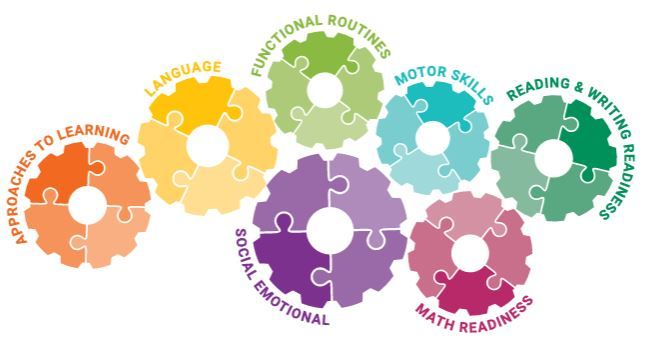
If you want added structure, the ARIS Curriculum can help. With 202 sequenced lessons that break down skills across 7 different content categories into teachable targets, ready-to-use materials, prompting suggestions and built-in data systems, ARIS makes group implementation more manageable so you can focus on teaching in the moment.